
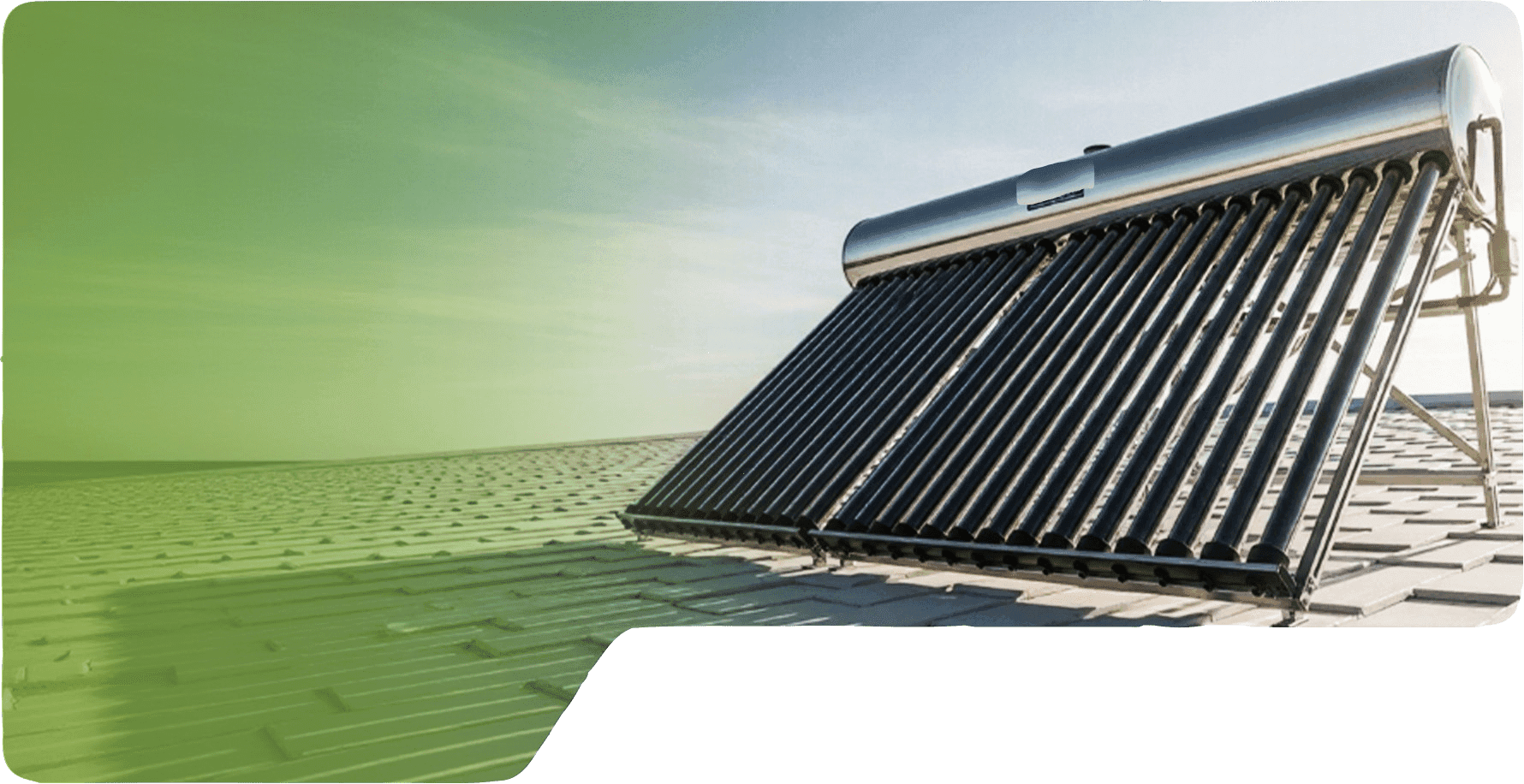
A solar geyser, also called a solar water heater, uses sunlight to heat water instead of burning gas or drawing a large amount of electricity. The idea is simple, and the parts are easy to understand once you know what each one does.
The Main Parts
- 1Evacuated tubes: glass tubes on the roof that absorb sunlight. The vacuum between the layers of glass reduces heat loss, so the tubes keep heating even when the air is cool. MaxGreen's 150L, 200L and 300L models use 15, 20 and 30 tubes respectively.
- 2Insulated tank: a stainless steel tank wrapped in thick insulation. MaxGreen uses 60 mm of insulation so the water stays hot through the night.
- 3Electric backup element: an Incoloy 800 heating element that switches on when there is not enough sun.
- 4Magnesium anode: a rod inside the tank that attracts corrosion and scale instead of the tank wall.
- 5Digital controller: manages the backup element and, on MaxGreen models, connects over WiFi so you can check and control it from your phone.
Step by Step: From Sunlight to Hot Water
- 1Sunlight strikes the evacuated tubes and heats the water inside them.
- 2Hot water is lighter than cold water, so it rises into the insulated tank while colder water flows down into the tubes to be heated.
- 3Water collects in the tank and stays hot because of the insulation.
- 4If the water is not hot enough, for example after several cloudy days, the electric backup element tops it up.
- 5When you open a hot tap, you draw hot water from the tank.
Why Evacuated Tubes?
Evacuated tube collectors are common in solar geysers because the vacuum insulation limits heat loss, which helps in cooler weather and in the morning and evening. Compared with simple flat collectors, they generally keep performing better when it is not bright and hot.
Water Quality and Maintenance
Tap water in many Pakistani cities is hard, which leaves scale inside tanks and tubes. The magnesium anode and a stainless steel tank are there to slow that down. Periodically check the anode and clean the tubes of dust, and ask your installer about a maintenance schedule. Regular care keeps a solar geyser running efficiently for years.
Where to Go from Here
If you want to see how these parts come together in a complete system, MaxGreen's solar geyser page lists every model with its specifications.
Get Your Free Solar Survey Today
Our team will visit your site, assess your energy needs, and provide a custom NEPRA-compliant proposal — absolutely free.
Book Free Survey